Is My Car a Total Loss?

If you have experienced an automobile accident and are working with your insurance company to get your car repaired, you may, unfortunately, learn that your vehicle is totaled. In this case, your insurer will not cover the cost of repairs but will instead determine what your vehicle is worth and pay out that amount.

Signs Your Car May Be a Total Loss

When determining if your vehicle is a total loss, your insurance adjuster will take into consideration the amount of damage, the age of the vehicle, and the value of the vehicle in relation to the cost of repairs. Before you receive their final decision, you may be able to get an idea of what to expect if you observe any of the following:

  • Excessive fluids leaking from the vehicle.
  • The vehicle is not drivable because it won’t start parts of the vehicle are broken or bent, obstructing the driver’s view.
  • Your car has a low value in the Kelly Blue Book.
  • Estimated repair costs are higher than your vehicle’s Kelly Blue Book value.

While your insurance company could come back with an evaluation that is different than expected, if they determine your vehicle is a total loss, there are various reasons. A total loss indicates that the vehicle cannot be repaired safely, the repairs cost more than the vehicle’s worth, or the state law requires your insurer to name it as a total loss due to the amount of damage.

If your insurer determines your car to be a total loss after an accident, you will have to remove your license plate as well as your personal items, and you will give your keys to the claims adjuster.

What to Do If Your Car is Not a Total Loss

If your car is not a total loss, you can visit Freedom Collision for an estimate for your repairs. We work with many major insurance carriers and are prepared to help you get your vehicle back out on the road!

Our experienced and highly trained repair technicians have the skills and state-of-the-art equipment to get the job done. Contact us today to learn more!


Author: Freedom Collision Center


Text for Author here

Recent Posts

May 13, 2026
Learn why parts availability can affect collision repair timelines and how Freedom Collision Center helps you plan ahead after an accident.
March 25, 2026
Learn what is affecting collision repair timelines, parts, and total-loss decisions, and how Freedom Collision Center helps Morgantown drivers.
February 3, 2026
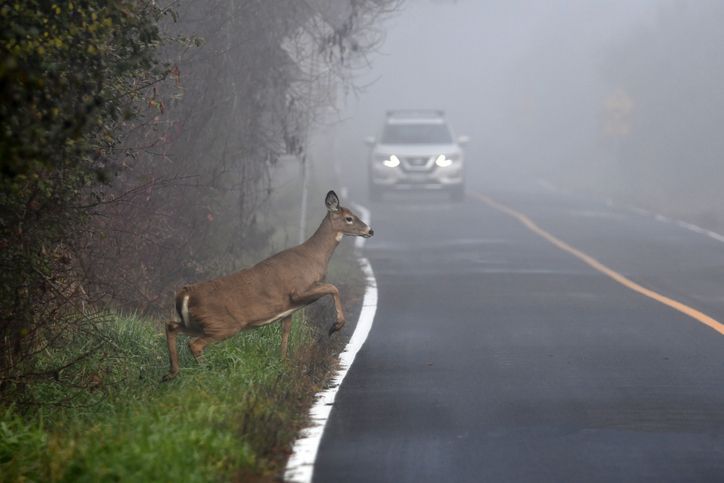
With the autumn season upon us, it means that many deer will be finding their way onto highways. Colliding with a deer can cause severe collision damage, so it is important to take defensive driving measures to reduce your collision risks. Deer season in West Virginia will generally run from October through December, with a dramatic increase in deer population movement. While the frequency of deer-related accidents is on the decline, these accidents are more severe due to the advanced technologies use in modern vehicles that need to be repaired after a collision . In West Virginia in 2018, drivers had a 1 in 46 chance of hitting a deer . Many deer collisions involve front-end damage which can elevate repair costs when you must replace the bumpers, front headlamps, windshield, and advanced safety technology located in this area. Tips for Driving Defensively to Prevent Collisions with Deer At Freedom Collision Center, we have compiled the top tips we have for helping you drive defensively to prevent collisions with deer . These tips include: Pay attention- While this may seem to be a no-brainer, it is important to pay attention and stay alert while driving. Being alert will help you notice deer crossing signs and will also allow you to react quickly if you see a deer. Be careful from dusk to dawn- Deer are more active during these hours, so it is important to be extra careful while driving during these times. Reduce speed- If you see a deer or other wildlife on the side of the road, be sure to slow down to avoid hitting them. They move in an unpredictable manner, so caution is key. Avoid swerving- While your first reaction to a deer coming into the path of your car is to swerve, you should brake. Swerving can lead to you losing control of the vehicle or hitting another car or object. Be sure to brake quickly and safely. If there is one, there is more. – This is the general rule of thumb when seeing a deer. Since they travel together, if you see one deer crossing the road, you’re likely to see more following behind. Be sure to stay alert and allow for the rest of the group to cross. We can’t control wildlife and when they venture onto the road, but we can control how we react. Follow these tips for a safer drive during deer season in West Virginia. Collision Repair Services Unfortunately, even with the right preventative measures, you may still end up colliding with a deer this season . If you need collision repair , the expert technicians at Freedom Collision Center are highly trained and equipped with top of line tools to get the job done! Contact us today to learn more!